
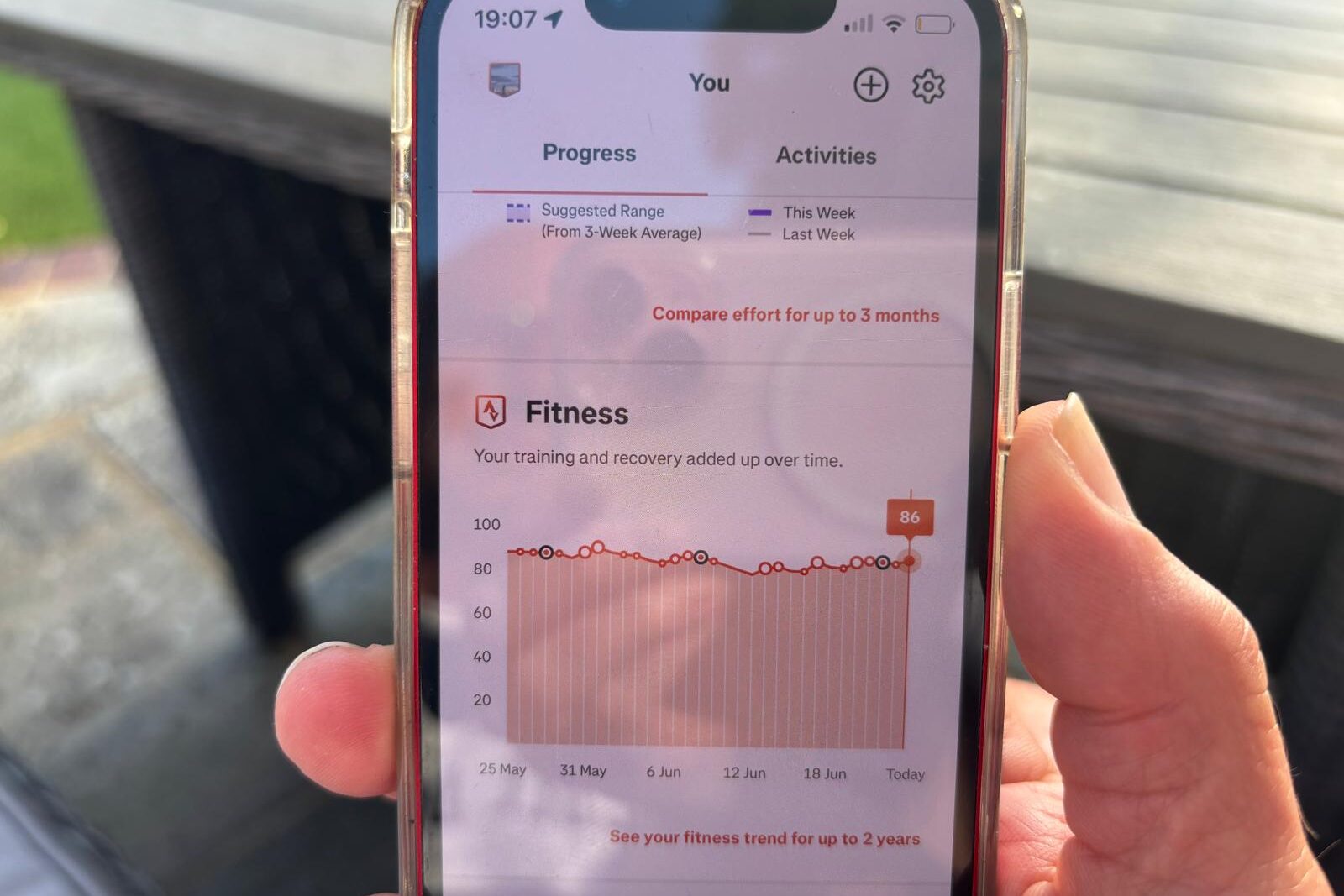
Does a higher Strava Fitness score mean I’m getting fitter?
It’s a question many Strava users ask when looking at their dashboards. And the answer is, as with most things in life, a little more complex than it first seems.
Strava’s fitness score is essentially a score that takes into account the intensity and duration of your training over a period of time. It’s based on your Functional Threshold Power (FTP for short) or your Threshold Heart Rate and the zones calculated from them.
The longer and harder you ride, the greater your training load and the higher your Strava Fitness number will be.
The limits of a simple score
So far, this all sounds quite simple, but start to think more deeply about fitness, and it gets more complicated.
If training were as simple as riding harder and longer, then you could answer the original question as yes, – but training is far more complicated than this.
Training the right systems
For genuine fitness gains, we have to train the different energy systems we have as human beings effectively.
A balanced approach is needed, with different sessions targeted at improving different components of our fitness.
A great example would be a track sprinter training 6 hours a day in zone 1, 7 days a week. Yes, their Strava Fitness would increase, but would they perform better on the track? Most likely not. They would suffer a significant detraining effect and be seriously fatigued, leading to a decline in performance. Training needs to be specific to the rider and their individual needs.
The definition of fitness depends on your goals
This neatly leads on to the second point – fitness means different things to different riders and athletes.
Being fit is such a broad term. On the one hand, it can be defined as simply being healthy and without illness. Most athletes would view their fitness as the ability to meet the demands of their sporting endeavours, for example, being able to climb mountains quickly, win races or achieve PBs in TTs.
The individual response to training
The bottom line is that fitness in the real world is specific to what you’re looking to achieve.
Strava fitness only looks at the intensity and duration of your rides, but does not take into account how you may respond to training, and how you will recover from training. These two variables are highly individual with some riders needing more training stimulus to gain fitness than others.
Strength, flexibility, mobility and any mental or cognitive benefits of training are also overlooked. This adds further weight to the argument that Strava Fitness doesn’t take enough into account to provide a properly accurate measurement of a rider’s overall fitness.
The bottom line: note it, but don’t rely on it
Ultimately, Strava’s Fitness metric is a simple tool to estimate how much and how hard you have trained in the recent period: it’s fairly one dimensional and doesn’t take into account what each athlete is trying to achieve.
Put simply, numbers and data points are only one side of the story. Pairing the numbers, metrics and data with a coach and mentor who understands and takes an holistic approach to training is needed to give you the full picture.
Please drop me a line if you would like to discuss this in more detail.
Michael