
Can We Still Afford to Support our Local Bike Shops?
As always at this point in the season, I needed a few things for the bike. Nothing out of the ordinary – new tyres, a cassette, fresh cleats, and a few spare inner tubes while I was at it.
Like many of us do, I filled a basket online. In this case, with Sigma Sports.
Something must have distracted me because I didn’t complete the purchase straightaway.
Roll on a couple of days, and I dropped into my local bike shop. I like supporting it, so I thought I’d see if I could pick up what I needed there.
That’s where things got interesting.
The cassette I needed – an 11-speed Ultegra R8000 – was £56 online. The local shop wanted £96. The same pattern was repeated across all the other items. Not a few quid here or there. In some cases, close to double.
I bought a few of the bits — tubes, a couple of extras — but I couldn’t bring myself to pay that sort of premium across the board.
And that’s the moment where my principles and my practices felt properly compromised.
What we value about local
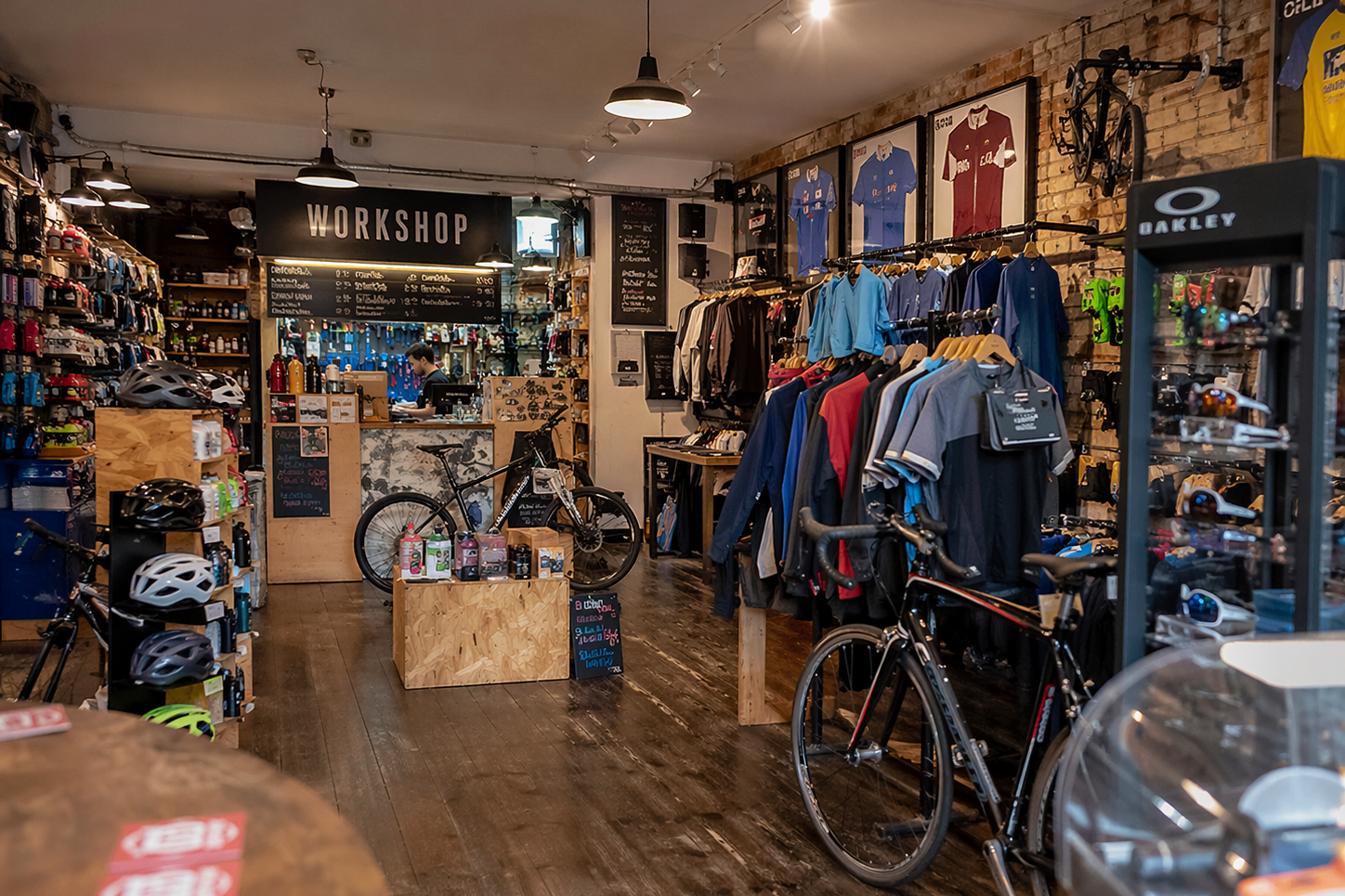
My local bike shop is more than a place for me to buy parts. It’s somewhere I can walk into with a problem and walk out with a solution. It’s the mechanic who can fix everything I’ve ever thrown at him. It’s the bit of advice that saves me buying the wrong thing. The familiar faces. The chat.
Part workshop, part advice centre, even part clubhouse – it does decent coffee and cake, too.
Strip that away, and retail cycling becomes a colder, more transactional experience.
The reality they’re dealing with
I can absolutely see the retailer’s side.
Local shops don’t have the buying power of large online retailers. They carry overheads – rent, staff, heating – that online operators can spread far more efficiently. They take risks on stock that might sit on the shelf for months.
They’re not charging more for the sake of it. They’re charging what they need to charge to survive.
Where it gets difficult
But here’s the uncomfortable bit. When the difference is 10–15%, it feels like a choice. When it’s 70–100%, it feels like charity.
Supporting local feels right, until it starts to feel irrational, and that’s not a particularly comfortable place to be. Most of us want local bike shops to survive; we recognise their value; we’d miss them if they weren’t there.
But there is, for most of us, a limit to what we’re prepared, or able, to pay.
So what happens next?
If this gap continues, it’s hard to see how things won’t change.
Fewer shops. Less local expertise. More reliance on ordering online and figuring things out for ourselves. Fewer places to drop in, ask questions, or just talk bikes. And that will be a loss, even if we’re not willing to pay to prevent it.
Which leaves a few questions that don’t have easy answers:
- Is the local bricks-and-mortar model for cycling sustainable?
- Should local shops be less focused on product sales and more on being community hubs with access to service and expertise? If so, how do they charge for that?
- And as customers, what’s a fair premium for keeping them in business?
Over to you
I’ll keep using my local shop for some things. For others, less so. I suspect I’m not alone in that middle ground – wanting to support local, but not always able to justify it.
But what do you do?
- Do you split your spending between local and online?
- Is there a price difference you’re comfortable absorbing?
- What is your local bike shop’s magic formula that keeps you going back?
I’m genuinely interested, because this feels like one of those issues we all need to care about.
Neil Edwards (views are my own)
If you enjoyed this, you might also enjoy.
The Simple Pleasures of Riding a Bike by Chris Hurcomb.